

PULAO / PILAF AND SHAHI TUKRAYMUNIZA TARIQ – PAKISTAN |
Pakistani food as we know it today is heavily influenced by the Mughal cuisine that was prepared in the royal kitchens of the Mughal Emperors when they came to the Indian subcontinent from Central Asia in the early 16th century. The Mughals were Muslims, thus their food did not contain any pork or its derivatives. Fowl, sheep, goat, beef and venison were the main components of meat dishes.
Mughlai food is very elaborate, and complicated to prepare. It is known for its richness and generous use of dried fruit, nuts and exotic spices such as cardamom, cinnamon, cumin, coriander, cloves, nutmeg, etc. These spices are now easily available everywhere, so cooking a “Royal” meal is today a common task.
Some of the most popular Mughal dishes prepared in Pakistani kitchens are Kofta (meat ball curry), Pulao/ Pilaf (rice with meat), Seekh or Sheesh Kabab (ground meat mixed with spices and cooked over an open fire), and Qorma (meat with bone marinated in yogurt and spices, and cooked on low heat).
Sweets or desserts play a very important part in the lives of Pakistani people. All good news such as births and marriages are announced by distributing sweets to family and friends. Most Pakistani/Mughlai sweets are very complicated and time-consuming to prepare, so they are made only on special occasions. They are mostly milk-based, with a liberal use of ghee (clarified butter), and lavishly garnished with nuts such as almonds and pistachios.
PULAO/PILAF
This is a very popular aromatic rice dish in Pakistan, and is usually served as a main course at weddings and parties. It can be eaten on its own, or it can be complemented with chutney (mint sauce) and/or a green salad.
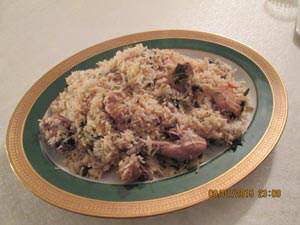
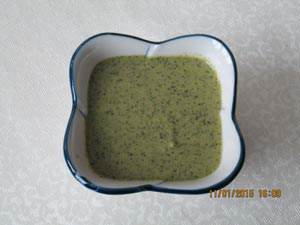
Pilau Mint chutney
Ingredients:
For the broth/stock:
1 kg meat with bones (chicken, mutton or beef)
3 cardamom (preferably big black ones)
4 cinnamon sticks
6 cloves
10-12 peppercorns
1 tablespoon cumin seeds
2 tablespoons coriander seeds
3 tablespoons fennel seeds
About 100 g ginger, peeled and roughly chopped
About 10 cloves of garlic, cut in half
1 lemon or lime, cut into quarters
salt to taste
Basmati rice: 1/2 kg
One medium onion, roughly chopped, and half a cup of oil
Directions:
Soak the rice for an hour before cooking
Put the meat in a pot and cover it with water.
Add all the spices, ginger, garlic and lemon, and cook slowly on low heat until the meat is tender and the spices have released their flavour and aroma into the broth. (About an hour for chicken and longer for mutton and beef.) The amount of water will depend on the meat you’re using; for example chicken requires less water than mutton or beef.
When the broth is ready, remove the meat and sieve the broth and discard the spices etc.
In another pan sauté the onion until golden brown. Add the meat and fry it with the sautéed onion for about a minute on medium to high heat.
Add the broth (4 to 5 cups for ½ kg of rice) to the meat and bring to the boil.
Add the soaked and drained rice into the broth and let them cook on medium heat until most of the water is absorbed.
Cover the pot, and on minimum heat leave to simmer for another 15 minutes.
Optional: The Pulao can be garnished with dried fruit and nuts when serving.
Mint chutney (sauce)
1 bunch of fresh green coriander/cilantro
1 bunch of fresh mint
a little green chilli
a small tomato
a few cloves of garlic
4 (or more) tablespoons of yogurt
some lemon juice
salt
Place everything together in a juicer/blender and make a fine paste. Water can be added if necessary.
DESSERT – SHAHI TUKRAY (Bread Pudding)
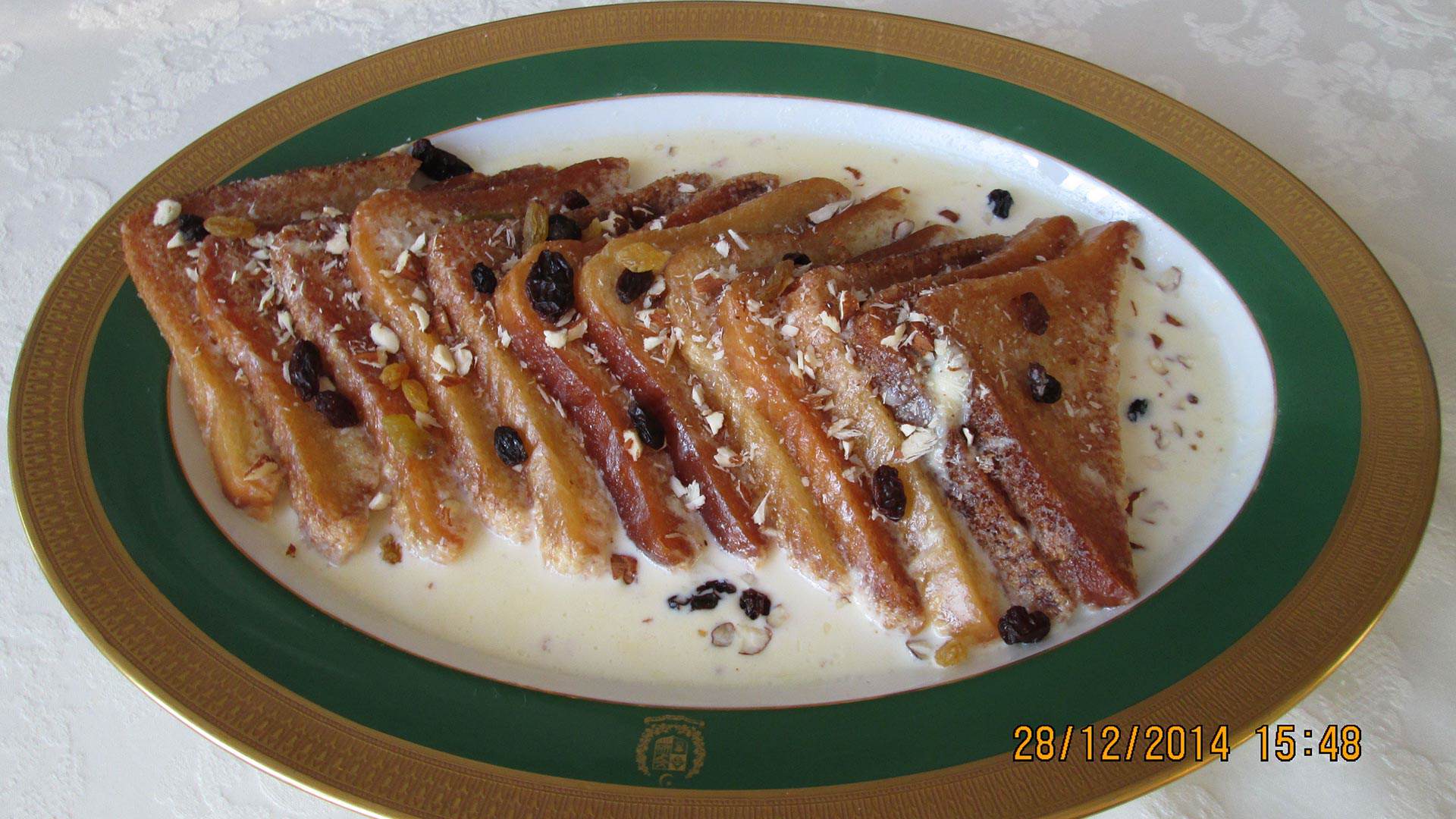
Shahi means “Royal” and tukray means “pieces” so Shahi Tukray literally means “Royal Pieces” – that is: royal pieces of bread – a delectable dessert whose origins can be traced back to the Mughals. It’s a simple yet elegant dessert to serve during festivals and on special occasions.
Ingredients:
1 litre of whole milk
4 slices of bread cut diagonally across, yielding 8 triangles
1 cup of sugar, or to your taste
4 green cardamom, slit
almonds and pistachios for garnishing
oil for frying the bread
Directions:
In a pan boil the milk and the cardamom, and reduce to half. Then add the sugar.
While the milk is being reduced, take another pan and shallow fry the bread until golden brown.
Line a dish with the pieces of fried bread and pour the reduced milk over it.
Wait for the dish to cool, and then garnish it with chopped almonds and pistachios before serving.
Optional:
Fresh cream may also be poured over the bread (after the milk, and before garnishing) in order to make the Shahi tukray richer. It can be served both hot and cold, but is better served cold.

Muniza Tariq

