
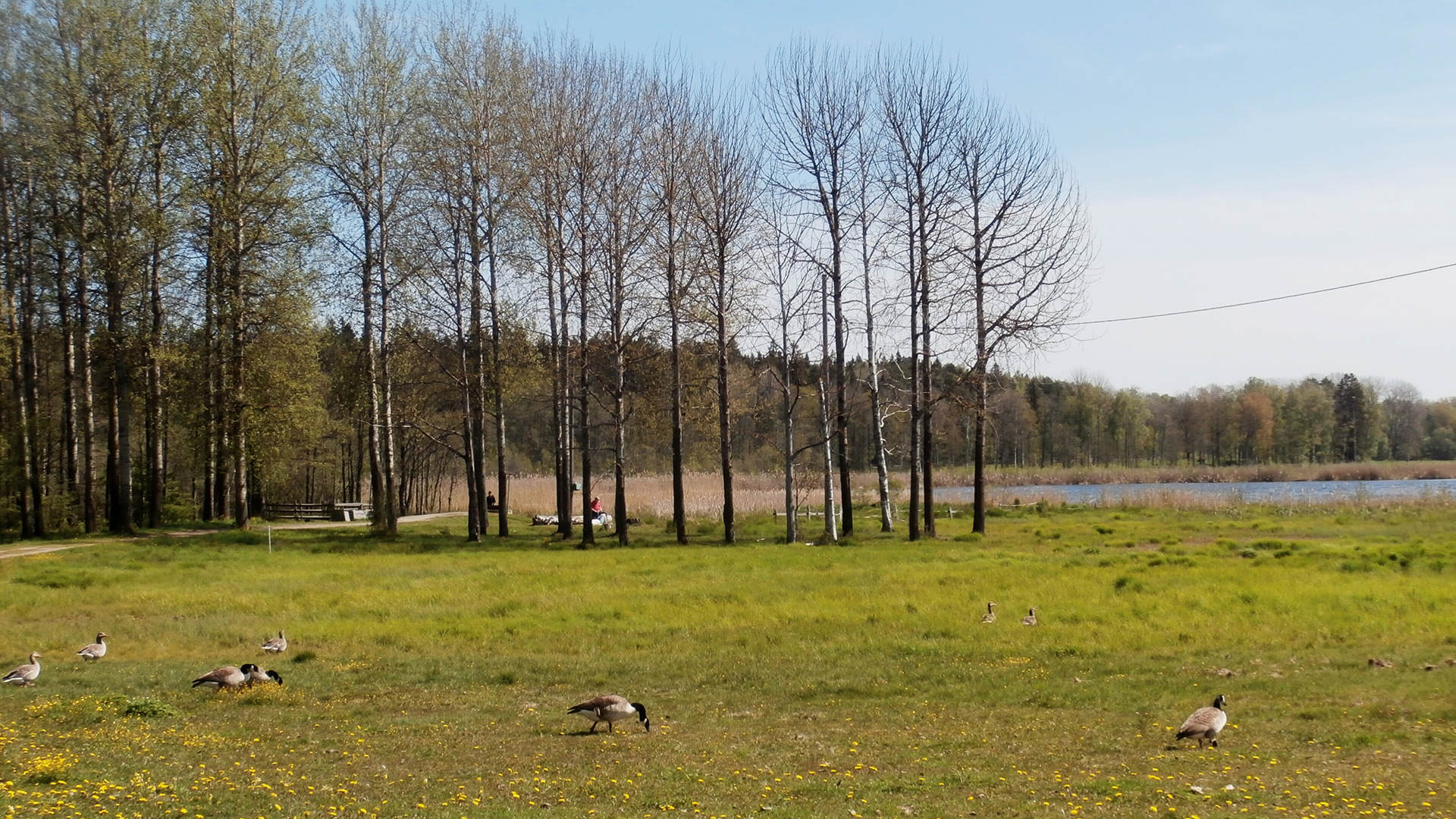

At last we begin to observe the first rustlings of spring after the long dark winter. The sun is returning rapidly, rising earlier and setting later, lengthening the days to a blessed eleven hours of daylight compared to the six hours of weak sunlight during the mid- winter months. Soon it will be the spring solstice, marking equal periods of day and night, and we shall revert once more to “summer time”.
With the increased sunshine comes the welcome sound of birdsong. These cheerful little creatures signal the return of gladness to nature, delighting us with their blithe melody.
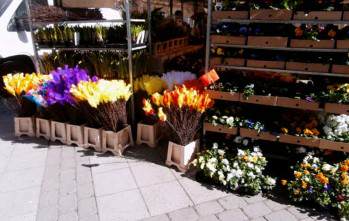
There are plump buds on the branches, swelling imperceptibly for their joyous outburst in May, and during our walks green spears can be seen piercing sturdily through the frozen soil towards the light of day – daffodils awakening from their long winter slumber. Tulips have already been on sale since mid-February, and påskliljor (Easter lilies – daffodils) fill the flower stalls, bringing colourful joy to winter-weary souls.
 |
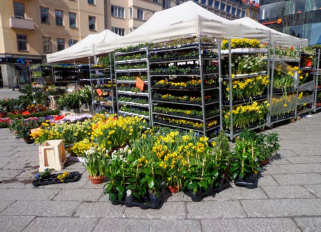 |
On Mothering Sunday at the English Church daffodils are presented to each member of the congregation, and we are invited to place them in vases before the Icon at the front, “as a way of making our prayers visible”. In the Anglican calendar this is traditionally the fourth Sunday in Lent, and is a practice dating from the 16th century. Our pastor Nick informs us that this is also known as “Refreshing Sunday”, as it is the only day during Lent on which we might take a brief respite from our strict vows, and have a little chocolate – or whatever else we may have forgone for forty days and forty nights.
 |
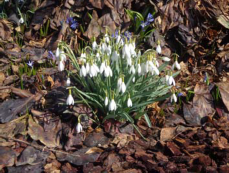 |
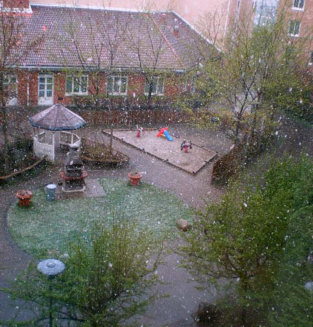
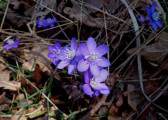
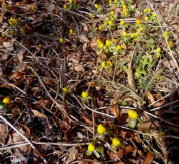
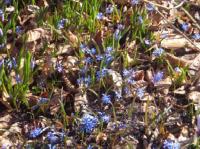
But the air is still bitterly cold, and when the sun shines and the clouds drift away, it is colder still, everyone still muffled in thick down coats, with hoods or woolen caps pulled low over their heads. Gloves and scarves are still necessary out of doors, and skating takes place on the lakes and city ice-rinks. It still snows on and off, as if winter is reluctant to release its icy grip. The tiny snödroppe (snowdrops) become buried in snow, along with their pre-spring cousins, the blåsippen (blue anemones), vintergäck (winter aconites) and blåstjärnor (scilla, squill or St. Bernard’s lilies.)
 |
 |
 |
The skiing season will soon draw to a close as large patches of frost-bitten grass appear on the snow-clad lawns and in the surrounding meadows. Central heating still operates
at full steam, making the air, already dry, dryer still, setting off all friction with the brittle crackles of static.
The sidewalks are strewn with fresh gravel, in anticipation of yet more falls of snow, and dust is raised by the many footsteps, adding to the harsh dryness of the atmosphere.
Slippery courses of ice still render some walkways impassable, where many layers of old snow have frozen solid during the icy nights. The nearby frozen Lake Mäleren has expanded and cracked at the edges, casting great slabs of thick ice onto the banks.

In the town square a large mound of old grey snow mixed with gravel, scraped together by the snow ploughs, still occupies the spot where the fruit and vegetable market stands during summer. We know that only when the gravel is cleared away, and the stall reappears, shall winter be regarded as over.
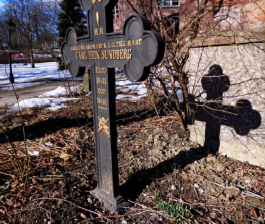
The English Church remains a warm and friendly haven during this dry, expectant season, and Iris and I spot a squirrel scampering amongst the tombstones in the snow- clad churchyard. She claims with some levity that the foolish little creatures forget where they have hidden their nuts, and raid instead the birds’ nests for their eggs.
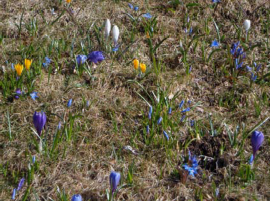
Tiny green spears appear through the frozen earth in the church garden, the embassy gardens, and the Nobel Park nearby – daffodil shoots, and a few shy crocuses.
 |
 |
Towards the end of March long stems of pussywillow also appear in the flower stalls and the Hötorget market place. The ladies carry several boughs in long white paper cones, which they will place in their homes as a reassuring sign that the arrival of spring is near.
Brightly-coloured Easter feathers begin to appear in the entrances to shops and homes, reminding all of the renewal of life, and the Resurrection of our Lord. These are a traditional Swedish Easter decoration – along with the spring flowers – and artificial rabbits and chickens.
The 25th March is Våffeldagen (“Waffle Day”) – the Annunciation of the Virgin Mary (nine months before Christmas) – Jungfru Marie Bådelsedag in Swedish. The name Våffeldagen is a corruption of Vårfrudagen (Our Lady’s Day). Waffles are baked on this day, and enjoyed with fresh berries or berry jams and whipped cream.
On my return to the Central Station, I hear once again the South American pan-pipers’ maudlin melodies, played with electronic backup to entertain the few intrepid tourists exploring the chilly north at this early stage. The pipers are strange harbingers of spring, as perceptive as the birds in recognising the first hint of the tourist season in Stockholm.
One morning I hear the welcome calls of the silverterna (Arctic terns), returned from the sunny south. They wheel and call outside my window, and I gratefully welcome them back to our area – as I do the noisy shuffle of the gravel-sweeping machine on the sidewalk outside – clear signs of spring’s timid approach.
Jessica’s CRISP WAFFLE MIX (4 portions)

Ingredients
125 g butter
200 ml milk
400 ml flour
2 eggs
1 tsp sugar
1 tsp baking powder 200 ml cold water
a pinch of salt

Method
Preheat the waffle iron
1. Melt the butter and allow it to cool.
2. Whisk together the milk, flour, eggs, sugar and baking powder into a smooth batter.
3. Add the melted butter, a pinch of salt and cold water.
4. Brush the surface of the waffle iron with some oil or butter, so that the waffles don’t stick.
5. As soon as the waffles are baked, place them on a cooling rack to prevent them from becoming soggy.
6. Serve them immediately with a dollop of slightly sweetened whipped cream, some lingonberry or other berry jam and a dusting of icing sugar.
See Jessica’s website to learn more her recipes and activities: https://www.tostockholm.com/

