

MUSIC OF NOTE ♫
ELIZABETH HANDLEY’S
HISTORY AND APPRECIATION OF MUSIC LECTURES, COURSES AND WORKSHOPS
E. Women in the Arts Lectures
All 1 or 2 hours, with musical illustrations within PowerPoint slide presentations
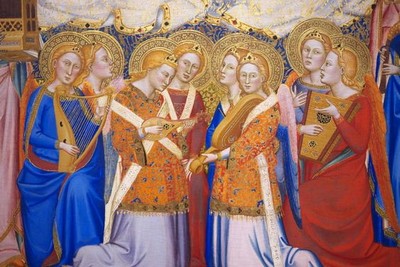
1.Women Composer Through the Ages – Undiscovered Muses
This lecture provides an introduction to the many neglected women composers active in a variety of fascinating roles throughout the past two millennia. Women have always made music, not always the same kind as men, as their roles and activities have always differed from those of men.
We begin in prehistoric times with cave paintings depicting women dancing and performing fertility rites, and the activities of the ancient Greek, Roman and Egyptian musicians. We continue to the Byzantine period and the Middle Ages in Europe, and through the Renaissance, Baroque and Classical Eras to 19th century Romanticism and Impressionism. From the Belle Époque we continue to explore women composers, performers and practitioners up until and including our time, and glimpse the work of South African women composers still active today.
Knowing something about the substantial contribution made by musical women throughout our Western cultural history provides a more complete picture of that history. Knowledge of this information “fills the gaps”, and proves a point: from courtesans to aristocrats, women’s accomplishments went beyond merely entertaining men or enhancing their marriage prospects. Women are shown to have done far more than simply “compose babies.”


2. Women Artists Through the Ages – More Undiscovered Muses
As with the above lecture about women composers, this lecture explores the activities of those artistic women who have historically been overlooked. From medieval times to the present day, the fair muses of canvas, wood and marble are explored. Their works of art are enjoyed with numerous slides, and their stories embellished with interesting anecdotes.
Like their counterparts in music, we do not find these artists mentioned in general history of music and art text books. But in this lecture the reasons for their obscurity, and sociological milieu, are examined, and their exceptional talents and significant contributions to the history of our Western culture revealed.

3. Clara Schumann – Composer, pianist, Pioneer

This lecture celebrates the 200th anniversary of the birth of one of the most extraordinary women in the history of Western art music. We explore her life and work, and see how, against insuperable odds, she disregarded the conventions of the day, and pursued a rigorous and highly successful career as a concert pianist throughout Europe, and in Russia.
Not only did she provide steadfast and unfaltering support for her mentally fragile husband, Robert Schumann, and bear his eight children, but she also found time to create compositions of great beauty – works that went beyond the superficial ditties and piano pieces of women composers hitherto.
In short, Clara Schumann proved that it was possible to manage a performing career beyond the borders of her native Germany, to initiate new practices in piano performance, and certainly to compose more than just babies!

