

MUSIC OF NOTE ♫
ELIZABETH HANDLEY’S
HISTORY AND APPRECIATION OF MUSIC LECTURES, COURSES AND WORKSHOPS
B. Miscellaneous Lectures
All 1 or 2 hours, with musical illustrations within PowerPoint presentations.
1.Vive la France! A history of French music through the ages
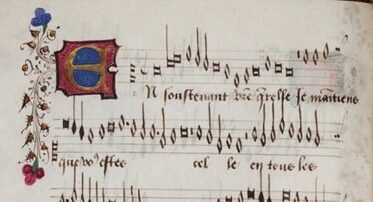
This lecture celebrates the music of France. We begin our journey in time with the Celtic bards of Roman times – think Cacophanix, of Asterix fame – and the colourful period of Charlemagne, William the Conqueror, the Crusades, and the troubadours and minstrels that sang of great deeds, chivalry, and l’amour. We hear the first sacred music composed at Notre Dame in Paris, and the beautiful secular songs commissioned by the powerful Dukes of Burgundy.
The lecture continues to the grandiose French Baroque, and the glories of the Sun King Louis XIV’s magnificent court at Versailles. The Revolution and ensuing Napoleonic Era inspired music and theatre, both serious and comic, leading to the réalisme of Bizet, and his operatic contemporaries. With the Romantics there is the stage music of Delibes, Adam and Auber, several women composers, Berlioz, and the versatile Saint-Saëns. We enjoy the music of the Impressionists, led by Debussy, and reach the hitherto unchartered waters of the “contemporary” scene with the music of Varèse, Boulez and Messiaen.
2. The Musical Highlights of Eastern Europe – some Classical Favourites, and the Lesser- known Composers
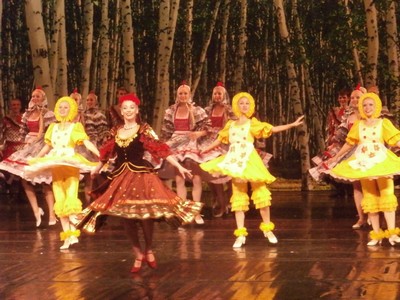
This lecture takes us on a musical tour through Central and Eastern Europe, featuring not only well-known giants such as Liszt, Dvorak and Chopin, but also lesser-known composers whose music merits further exploration. Illustrated with images and music, the journey begins in Hungary and continues to Poland, with its rich folk heritage (also expressed in Chopin’s Romantic patriotism) and then to the Czech Republic and Croatia. The ever-popular folk music of Romania, with colourful gypsy elements and unusual instrumentation, has long been used by Western composers.
It will be illustrated how Post-Napoleonic Nationalism afforded emerging nations the opportunity to liberate themselves from foreign domination, and a vehicle with which to express their individuality through the arts, especially music, with the use of both musical and literary folk material.
3. Rule Britannia! – A celebration of British music through the ages
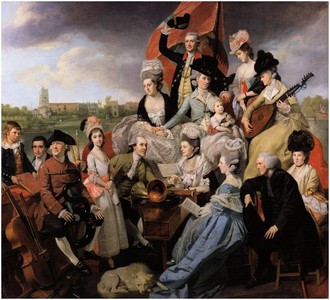
This lecture was commissioned by the British and Commonwealth Association in Stockholm, to celebrate the Queen’s Diamond Jubilee.
We enjoy a festival of brilliant English music from the time of Henry XVIII and the glorious Elizabethan Golden Age, to the ceremonial music of Purcell and Handel. Thomas Arne and William Boyce fill the gap between Purcell and Elgar, which unjustifiably earned England the epithet of “the Land without Music”. From Parry, Stanford and Holst we reach the modern repertoire of Walton and Britten, and end on a lighter note with Delius and the English Impressionists, and Ronald Binge, of The Elizabethan Serenade fame.
4. British Music Through Three Reigns
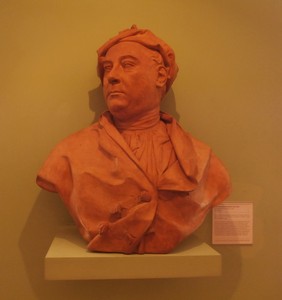
This lecture accompanied that presented by Nicolas Merchant in Johannesburg (SA) in 2008, in which he talked about English painting “Through Three Reigns” – those of George III, Victoria, and Edward VII. My area of focus was English music during the same period: from the time of Handel in the mid-18th century, through the Victorian and Edwardian Eras.
We begin in 1760, the year of Hanoverian George III’s accession to the throne, the year after the death of one of the towering figures of the English Restoration Baroque: George Frederick Handel. We leave behind the below-stairs ballad music of The Beggar’s Opera, and enter a phase of relatively little native English composition. But the London scene was greatly enriched by the arrival of several interesting visitors, amongst whom were the precocious child prodigy WA Mozart, JC Bach – one of Johann Sebastian’s gifted sons, Josef Haydn, and Mendelssohn.
The pomp and circumstance of the Victorians, Elgar, Parry and Stanford is included, and the ever-popular works of Gilbert and Sullivan, and Gustav Holst. We end with William Walton’s Crown Imperial, commissioned by the BBC for Edward VIII’s coronation – which never took place. It was played instead at the coronation of his younger brother, George VI, the current Queen’s father.
5. If music be the food of love – Love in all its guises, expressed in music
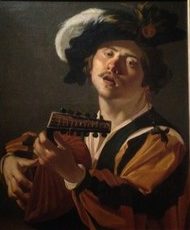
This delightful lecture was created at the request of the wife of the erstwhile British Ambassador to Stockholm, for a musical morning at the Residence for the enjoyment of the Diplomatic Women’s Club.
In this presentation we enjoy anecdotes from literature and opera, from medieval laments to the frivolities of Dean Martin, Gloria Gaynor and Marilyn Monroe, and discover how love has been the most powerful source of inspiration for poets, singers and composers, and indeed most creative individuals, for generations.
Enjoyable preparation for this event revealed that there are very many different kinds of love expressed in music: passionate love, scorned love, unrequited love, jealous love, lecherous love, ill-fated love, forbidden love, betrayed love… love lost – and love found!
– From ancient times to the present day, love has clearly been far the most popular subject for musical and artistic expression than any other emotion.
6. Music and Art in Renaissance Italy – An Aural and Visual Feast
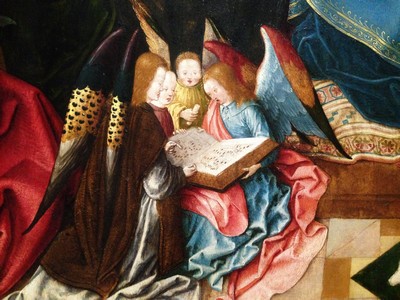
Renaissance thinkers cherished life as a divine gift, and thus the artists of the time expressed religious devotion by painting warm, lifelike people, in place of the flat stylized figures of medieval art. Likewise, composers wrote music of a fuller, richer sonority than the stark and slender lines of the old Gregorian chants.
In this lecture the art and music of this most glorious period in the history of Western art is explored. Regarded as the beginning of “modern times”, the Renaissance swept away customs and institutions which had dominated Europe for a thousand years, such as feudalism, and the power of the Church. And the country in which this magnificent flowering of the creative spirit first manifested was Italy. Join me, with music and slides, into the sound world of Michelangelo, Leonardo da Vinci, Raphael and many others.
7. In a Nutshell – A History of Classical Music in Brief – Classical music for the uninitiated
This lecture, enlivened with amusing and historical anecdotes, traces the history of our Western art music from the “Dark Ages” after the Fall of the Roman Empire to the composers of the present day. We chart the history of Europe throughout, following the influence of current events on the work of the most significant composers of each period, and their contemporaries in the visual and literary arts. From Ambrosian chant in 4th century Milan to John Adams in the New World, this lecture aims to place each period and creative luminary into context, thereby acquainting the uninitiated with the basics of our Western Cultural heritage.
8. Musical Instruments featured in Paintings

In this lecture various musical instruments, no longer in use, but featured in paintings are identified. Included are recordings of these instruments, enhancing the overall experience of the paintings, and taking us back into the sound worlds of the painters.
9. Musical Muses

This lecture is an exploration of the women who inspired some of the greatest music ever composed by several well-known composers.
10. The Story of the Nativity in words, pictures and Music
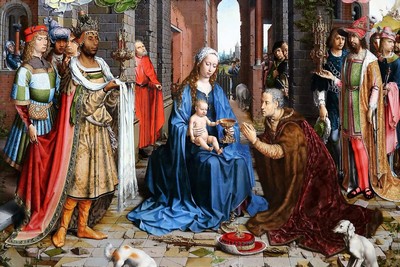
This lecture presents the well-known story of Jesus’s birth, as depicted in famous paintings, accompanied by matching music.
11. Coronation Music – the Best of Charles’s Choices
This lecture features much of the beautiful music used during the Coronation of 2023, featuring both glorious “old” familiar items and newly commissioned works. All designed to showcase British composers and artists, who had the opportunity to shine, become known, and enjoy fame and fortune.
12. Becoming Culture-wise in one Easy Lesson – Classical Music for Initiates
OR
Becoming Culture-Wise in Two Easy Lessons – Classical Music for Initiates
In this lecture we embark on a wonderful, colourful journey through the history of the arts, from their significant beginnings in medieval Europe to the present day.
During our time together I hope to impart my passion for the arts to you, and to encourage you to extend your learning experience with further reading and listening. For art is a reflection of the society in which we live, or of past societies that created them, and much of it is around us today, wherever we care to find it.
13. A la mode! A History of Music and Fashions
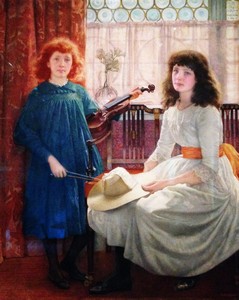
This lecture witnesses a “cavalcade” of costume and music through the ages – a period of nearly a thousand years. While listening to the music of each era, we shall see what people were wearing at the time, through the utilization of famous paintings, and with slides of period clothes.
In the study and appreciation of costume, the true essence of each period is revealed. We shall see how clothes and fashion provide a fascinating and intriguing visual insight into the social and psychological reasons for fashion – all linked to the music of the time.
14. At the Movies! – Music used in Films
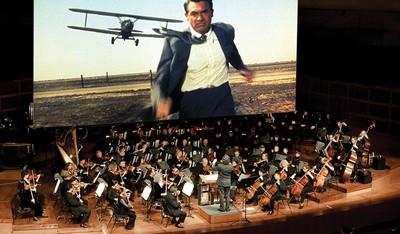
This lecture, which has an entertaining workshop element, explores the various aspects of music used in films: the use of existing Classical music, the use of “period” music for period films, and films about famous composers.
We begin with a brief history of the motion picture – “movie” – and learn about significant sound track composers, both past and present. Included is the music of such movie icons as John Williams, James Horner, John Barry, Ennio Morricone, Nino Rota, Maurice Jarre, Hans Zimmer, and some of the women composers, such as Rachel Portman, of Chocolat fame.
15. Musical Muses – Women who inspired the Great Composers

From medieval romances, embodying the very essence of the Courtly Love Tradition, to the highlights of the 19th C Romantic Era and beyond, some of the greatest music ever written was inspired by the composers’ passionate relationships with women.
Many believe that great bursts of inspiration that engender significant artistic creation are not necessarily the result of passionate romantic love for someone. In Greek mythology it was believed that the Nine Muses were the source of such stimulus. Throughout the history of Western art, artists, writers and musicians have prayed to the muses, or alternately, drawn inspiration from personified muses that conceptually exist beyond the borders of earthly love.
This lecture presents the stories of some significant composers who were inspired by earthly muses – sweethearts, wives – and unobtainable loves – and play you some of the music they inspired. These illustrations and stories are presented chronologically, thereby also taking the audience on a journey through musical history.
16. Dante Alighieri (1321-2021) – 700 Years Inspiring the Arts
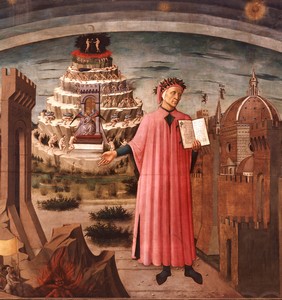
While not a composer, this great Italian poet, active in Northern Italy at the dawn of the Renaissance, was extremely knowledgeable about the arts of his native land, both contemporary and Ancient. With a rich source of Classical Roman poets within his immediate orbit, Dante drew inspiration from the likes of Boethius, Cicero, Ovid, and especially Virgil. The latter became his “guide” on his journey through the Afterlife, vividly portrayed in the most celebrated epic in Italian literature: The Divina Comedia.
Indeed, it was Dante who deliberately set about “unifying” the disparate Latin dialects of the Italian peninsular and establishing a workable, modern language that could be used and understood by the common folk and educated men of letters alike.
This “Father of the Italian language and literature” in turn inspired generations of other poets, painters, and composers for the next seven centuries, and it is this rich artistic legacy that is explored in this lecture, and well as his life and times. For Dante, born into an aristocratic, erudite family in Florence, was ambitious as a politician, and inevitably became embroiled in the incessant petty politics and battles that took place in medieval Italy. The legendary power struggles between the Guelphs and the Ghibellines ultimately led to his downfall, and lifelong banishment from the City State of Florence.
Images of famous paintings inspired by Dante’s works are displayed, while listening to music by such Renaissance composers as Luca Marenzio, who set Dante’s poetry to the elegant canzone of the day, through to Franz Liszt’s mighty Dante Symphony, excerpts from operas, and some contemporary works of our own era. Dante’s own use of music in Divina Comedia is also examined, along with his versatile engagement of all the senses in his poetry, and in his symbolic use of music as a representation of order and beauty.
Alternative blurb:
Dante Alighieri (1321-2021) – 700 Years Inspiring the Arts
This year we celebrate seven centuries of creative activity inspired by one of the greatest literary figures the Western world has ever produced. Dante Alighieri’s beautiful lyric poetry, motivated by the medieval Courtly Love Tradition as well as his great love for his muse Beatrice Portinari, has been the source of inspiration for a vast range of creative endeavour.
Dante’s significance lies in the consolidation of Italian as the unified language of the peninsular at a time when there were many different dialects, as well as his establishment of the language of modern Italian literature.
Set against the turbulent political circumstances which led to his exile from Florence, it will be seen how Dante stimulated other poets, composers, artists and sculptors. While listening to ample musical examples, pictures will be shown featuring examples of the visual arts inspired by his themes and imagery; Dante’s language was extremely rich, filled with Classical and theological references. His symbolic use of music as a representation of order and beauty, and virtuosic engagement of all the senses in his poetry is also explored.

